
Programs/Schools
Schools
Schools ask for a class that uses their rooms and their students. Muru RoboKids brings the kits and an instructor. The school brings the timetable and, when it wants, its own teacher in the room.
Who it is for: Head teachers and host teachers arranging a room
It involves
- Kits brought in
- A Muru instructor
- A host teacher welcome
- Ages and rooms agreed first
The school keeps the room
Students stay in a place they already know. Muru brings the kits and the instructor.
A teacher who can continue
The host teacher can follow the sequence and keep the club going after the visit, using the same order of projects.
A cohort that has already happened
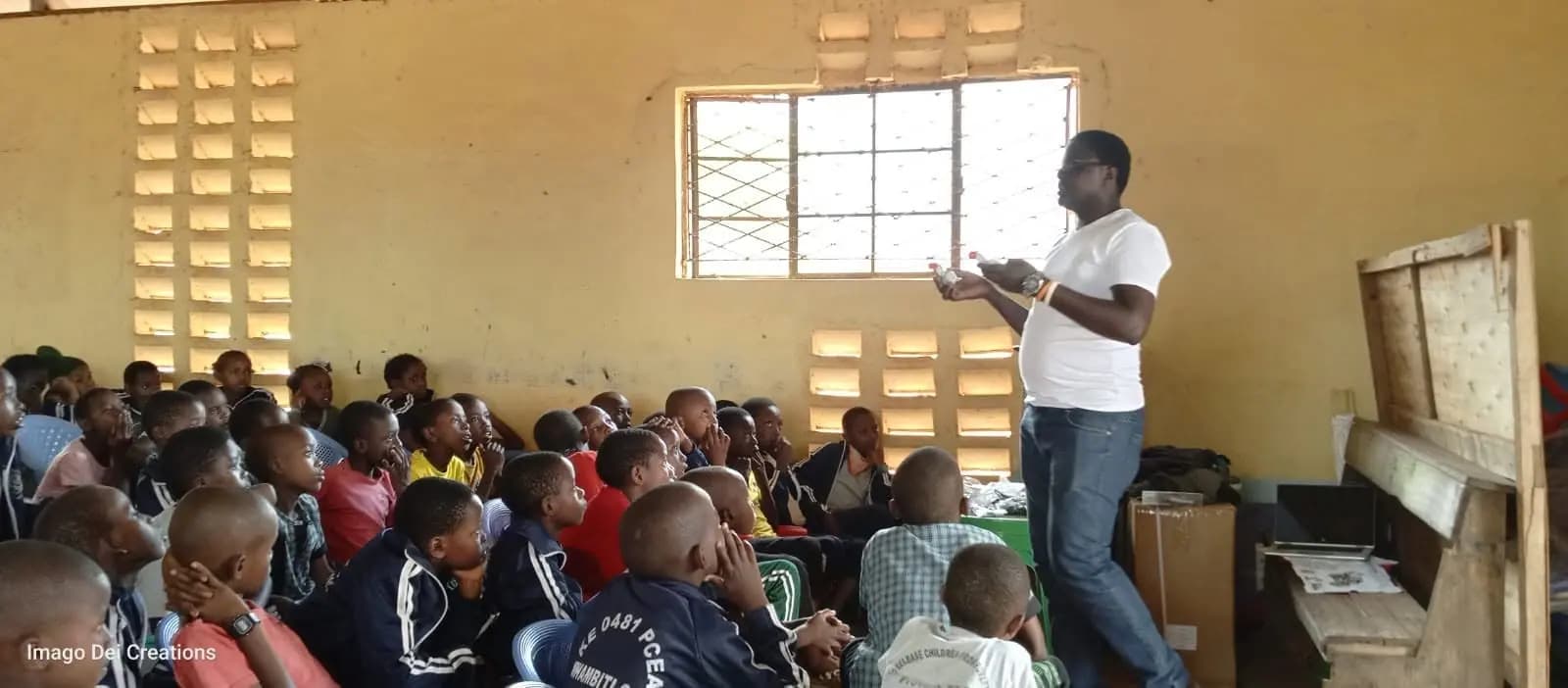
April 2024: 26 students from several schools at P.C.E.A. St. Stephen’s Academy in Voi. Francis Monaja taught. Chengo Erick, the school’s ICT teacher, supported the sessions.
A contest only if the school has one
If students are heading to a school STEM contest, the projects aim at that contest. If they are not, the class does not invent one.
What has already happened
In April 2024, Kenya News Agency reported a holiday cohort of 26 students from several schools, meeting at P.C.E.A. St. Stephen’s Academy in Voi. Francis Monaja of Muru Technologies taught the robotics. Chengo Erick, an ICT teacher at the academy, supported the sessions. That is the model: a host school, a Muru instructor, and students who go back to their own schools with a robot they can explain.
An inter-school bootcamp is the other version. Students come from more than one school and work in mixed groups. It is still a Muru class. It is not a tournament we organize.
How a visit is arranged
Agree the room and the ages
Admissions confirms the age range, the dates, and a room where kits can stay out if the club runs more than one day.
Kits and an instructor arrive for those dates
Muru RoboKids brings the kits and the person who teaches. The school brings the students and the timetable.
A host teacher can keep the sequence
The school’s teacher can follow the learning sequence and discuss continued delivery with Muru. Online course access can be arranged through the Learning Hub.
The visit ends with a demonstration
Students run the robot and explain one change. Kits leave with the instructor unless a later date was agreed. There is no furniture install and no maintenance contract.
What the school receives
Kits for the sessions that were agreed
Motors, sensors, and the boards for the project in front of the group. They stay for those sessions. We do not leave a furnished laboratory behind.
An instructor, and a sequence
A Muru instructor teaches the sessions. The host teacher can follow the learning sequence, while the Learning Hub provides account-based access to published online courses.
A demonstration at the end
Students run the robot and explain one change. If a school contest is already on their calendar, the project aims at that contest. We do not enter the group in an international league.
What a school should ask us
Ages and how many rooms
We need the age range and a room where kits can stay out between sessions if the club runs more than one day.
Who else is teaching
A host teacher is welcome in the room. If the school wants the club to continue, that teacher can keep the same sequence after the visit.
Whether a competition follows
If the students are heading to a school STEM contest, the projects are aimed at that contest. If they are not, we do not invent one.
Questions
Do you install a permanent lab?+–
No. The offering is a holiday cohort or a recurring club. Kits stay for the sessions that were agreed. A permanent installed laboratory is a different product, and it is not what this page describes.
Can a company fund the cohort?+–
Yes, by writing through the support page with the school’s name, the ages, and the project you hope they finish. A gift is arranged with admissions. It is not a tax certificate.